

Articles
What we’re contemplating, doing, and reading.
Building a Compassion-Centered Healthcare System: Part 1
A Dialogue Between The Compassion Institute and El Rio Health: Part 1
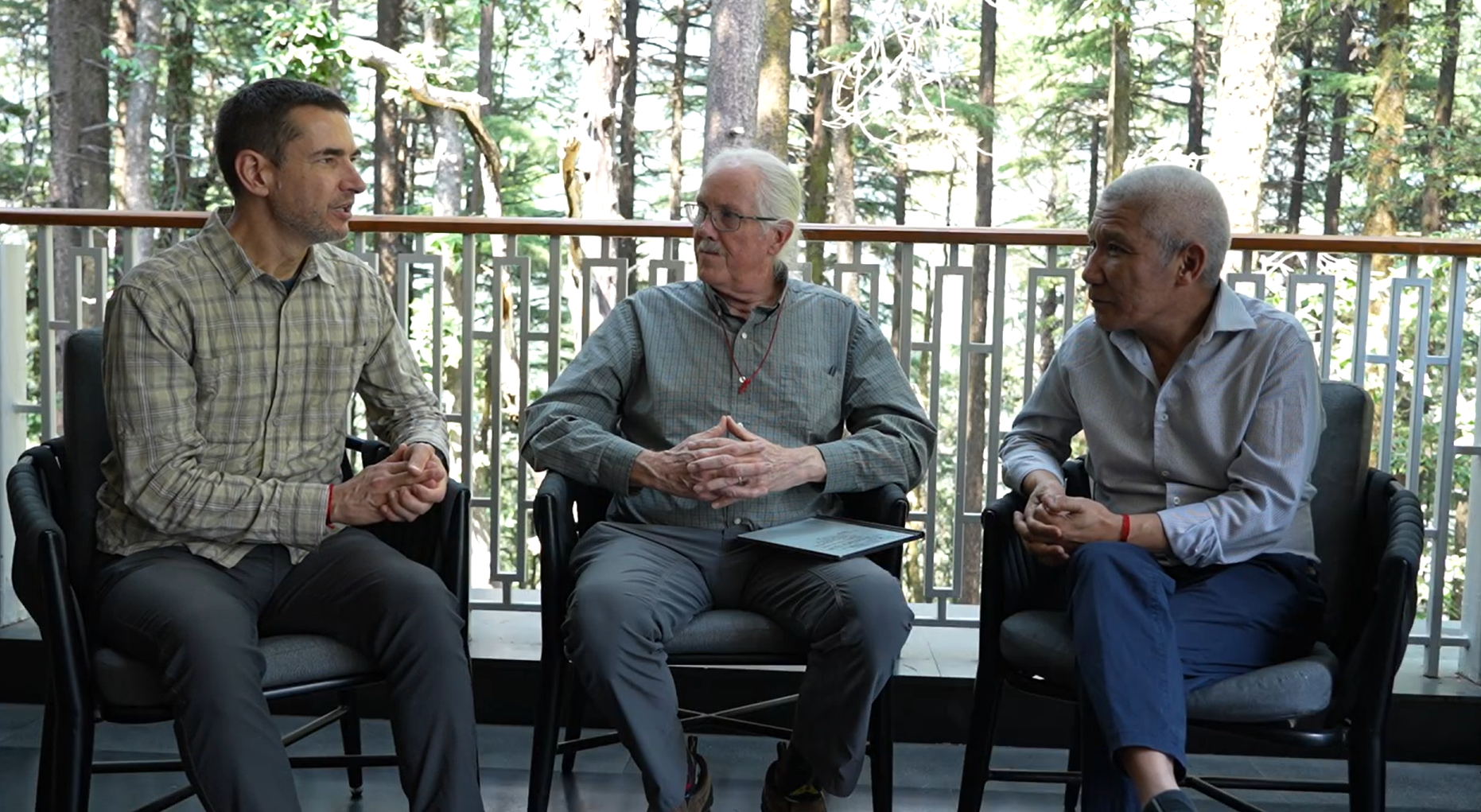
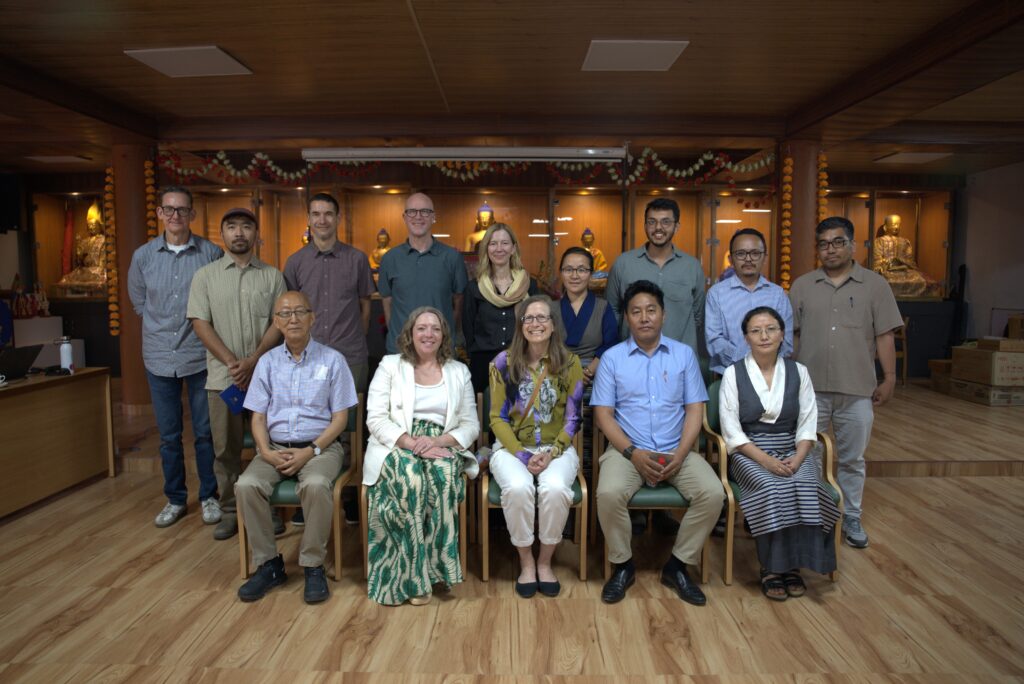
In late May 2026, in the foothills of the Himalayas, surrounded by prayer flags, monasteries, and the enduring spirit of compassion that permeates Tibetan culture, a special conversation unfolded. Compassion Institute hosted an intimate circle of leaders and visionaries for a private leadership retreat, From Inner Harmony to Collective Healing, devoted to inner mastery, mind-body health, and global impact. Among those gathered were healthcare leaders from the United States and Australia, representing organizations at the forefront of integrating compassion-based training into healthcare at multiple levels, from supporting individual caregivers to shaping organizational culture and systems of care.
At the conclusion of the retreat, leaders from Arizona’s El Rio Health (Senior Vice President and Chief Clinical Officer Doug Spegman, MD, and Chief Wellness Officer and clinician Mark Schildt, MD) joined Compassion Institute President and Co-Founder Thupten Jinpa for a conversation reflecting on the partnership between El Rio Health and Compassion Institute (CI). Together, they explored not only the work accomplished to date, but also the potential for this pathbreaking initiative to help create a compassion-centered healthcare system.
Their dialogue went well beyond physician burnout or leadership development. Instead, it centered on a much larger question:
Can compassion become an organizing principle for healthcare itself?
It is an ambitious question. But one that feels increasingly important as healthcare organizations across the country seek new ways to support the wellbeing of both caregivers and the communities they serve.
For those who gathered in Dharamsala, this conversation was not theoretical. It reflected years of shared learning, partnership, and a growing belief that compassion can become a practical force for strengthening healthcare organizations.
A Partnership Years in the Making
The conversation did not begin in India.
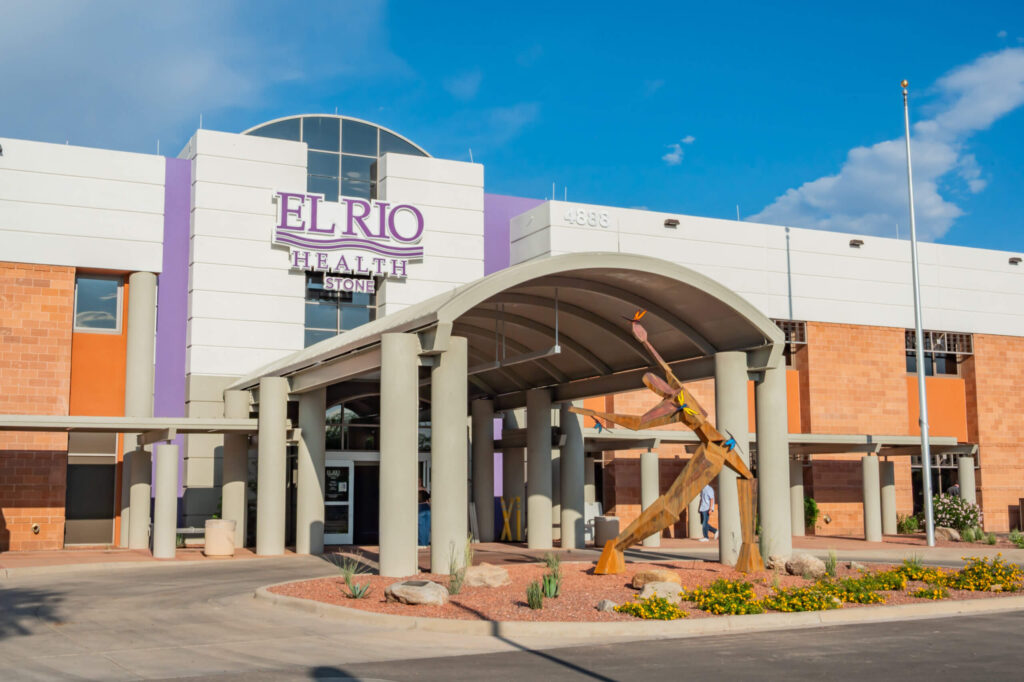
It began several years earlier through a partnership between Compassion Institute and El Rio Health, Arizona’s largest Federally Qualified Health Center (FQHC), serving nearly one in ten people in the Tucson metropolitan area.
Like healthcare organizations across the country, El Rio was navigating increasing clinician burnout, workforce shortages, administrative burdens, and growing patient complexity. Rather than treating these as isolated challenges, El Rio asked a different question:
What would it look like to intentionally build a culture where compassion supports not only patients, but also the people who care for them?
Together, Compassion Institute and El Rio began implementing a series of evidence-based compassion programs, including Compassion Cultivation Training© (CCT™), Caring From the Inside Out (CFIO), Peer Support workshops, monthly alumni practice communities, and compassionate leadership development.
As the partnership evolved, it became increasingly clear that this work was about more than delivering compassion-based trainings.
It was about cultivating a culture where compassion could become part of how an organization leads, learns, and cares—for patients, colleagues, and the communities it serves.
What the Research Began to Show
From 2024 to 2025, Compassion Institute’s Research, Evaluation, and Learning team conducted an in-depth evaluation of the partnership through surveys, interviews, and focus groups with clinicians, leaders, and staff across El Rio Health.
The findings were encouraging.
Participants in Caring From the Inside Out (CFIO) reported meaningful improvements across several areas of wellbeing:
⦿ 81.5% were more connected with their sense of purpose
⦿ 75% felt that their mental and emotional wellbeing was improved
⦿ 73.8% were better able to focus on achieving their goals
⦿ 55.4% were enjoying their work more
⦿ 53.8% felt less burned out by their job

The numbers told an important story. But the conversations behind those numbers told an even richer one. Again and again, clinicians, leaders, and staff described something that is often difficult to measure but impossible to ignore: a growing sense of connection.
Participants spoke about finally having space to discuss burnout openly. Leaders reflected on the importance of participating alongside staff rather than simply encouraging others to attend. Relationships formed during compassion trainings continued long after the programs ended.
One clinician summarized the experience simply:
"Sometimes as a clinician with burnout, you don't want to talk about it. You just suck it in and you feel like you're alone in that… It's very difficult to actually talk about. So having this vehicle to be able to open up about those things, I think is helpful."
One lesson emerged repeatedly throughout the evaluation. Community itself became part of the intervention. The evaluation also reinforced another important lesson. Organizational transformation is not built overnight.
El Rio’s leadership had already invested significant time, resources, and intentionality into creating a culture centered on clinician wellbeing. From comprehensive burnout assessments to dedicated leadership roles and organizational planning, compassion was never approached as a standalone program. It became part of a broader organizational commitment to supporting those who care for others.
Leadership participation proved equally important. Clinicians consistently shared that seeing senior leaders participate in compassion-based trainings during the workday sent a powerful message. In organizations where time is among the scarcest resources, leaders demonstrated that caring for caregivers was not peripheral to the mission, it was central to it.
The evaluation also surfaced an important reality familiar to healthcare leaders everywhere. Burnout cannot be understood apart from the systems in which people work. As one El Rio leader observed during the evaluation:
"Sometimes as a clinician with burnout, you don't want to talk about it. You just suck it in and you feel like you're alone in that… It's very difficult to actually talk about. So having this vehicle to be able to open up about those things, I think is helpful."
Compassion-based training can strengthen resilience, deepen connection, and help clinicians remain connected to their original sense of purpose. At the same time, organizational wellbeing also requires addressing structural challenges, including administrative burden, workflow design, and organizational policies.
At El Rio, this systems perspective extended beyond compassion training itself. Investments in improving electronic health records and reducing administrative frustration became part of the broader commitment to creating a healthier workplace. These findings helped shape the conversation that followed in Dharamsala. Rather than asking whether compassion matters, the dialogue explored a larger question: How can compassion become part of the design of healthcare itself?
A Conversation About What Comes Next
Early in the conversation, Doug Spegman, Senior VP and Chief Clinical Officer of El Rio Health, framed what many healthcare leaders are asking today.
"What we wanted to do, and hopefully this time together will help those at El Rio and Elk Ridge understand the vision that you have. Maybe if you can briefly speak a little bit about yourself, and then the vision of Compassion Institute."
Dr. Doug Spegman
Thupten Jinpa responded by describing the vision that has inspired Compassion Institute since its founding.
"If there is one central message that His Holiness wants to share with everybody, it's really the importance of compassion. Compassion is a natural human quality we all possess. The challenge is that we don't always tap into it. If we can bring compassion not only into individuals, but into organizations, systems, and society, everything changes. Compassion Institute exists to take that intuition, test it, and turn it into reality."
Dr. Thupten Jinpa
That exchange captures an important aspect of the partnership. This work has never been simply about teaching compassion. It has been about exploring how compassion can become part of the infrastructure of healthcare itself.
Read part two of this series here.
Click here to read more compassion blogs and stories.