

Articles
What we’re contemplating, doing, and reading.
Compassion as a Tool for LGBTQ+ Advocacy

June is Pride Month, and that feels like an important thing to affirm right now. Gallup recently reported a second consecutive year of declining support for LGBTQ+ people among U.S. adults. And some allies who were affirming their support for Pride just a few years ago are now staying quiet.
It feels like an important time to be upfront with my values, to actively include myself in the LGBTQ+ camp, and to affirm my support for the rights of Trans and Gender Nonconforming (TGNC) people to access lifesaving Gender-Affirming Care (GAC). But I’d be lying if I didn’t mention that sometimes it feels daunting. How are we really going to convince hostile legislatures to roll back laws criminalizing medical care, or who seek to further to erode queer rights?
And what role does compassion play in this situation? Does it have a role in helping people maintain hope that justice really is a long, forward march? We know that compassion is a three-step process:
The first step is becoming aware of another person’s suffering or unmet need. The second step is being emotionally moved by that suffering. We feel with or for another being.
That two-step process is actually the basis for empathy. “I see you, and I am moved by your suffering.” Where compassion differs from empathy is when we add a third step:
Actively wishing to see that suffering relieved, which often leads to our compassionate action.
What that compassionate action might be will differ depending on the situation at hand, and what we’re able to do at any given moment.

The above photo represents one of my favorite examples of compassionate action. Some background – Issan Dorsey was a queer Buddhist monk working to bring Zen programming to queer and trans folks in San Francisco in the 70s and 80s.
When the HIV/AIDS crisis first hit the city, Dorsey and his colleagues started the Maitri (my-tree) Home. “Maitri” is Sanskrit for “compassionate friendship” and the Maitri Home was a place where people with AIDS, often in the last days of their lives, could be surrounded by others who cared about their wellbeing and happiness. The Maitri caregivers nursed when they could, comforted when possible, and sometimes were there to simply bear witness and keep company.
A crucial learning from compassion cultivation is knowing that sometimes our compassionate action does not actually involve fixing anything. Sometimes, there’s nothing that can be done to fix the situation, as was the case for the folks working at the Maitri House in the years before HIV/AIDS became treatable.
Sometimes, the compassionate action that we can take is to accompany someone in their suffering. That takes us back to the Latin etymology of the word compassion, which is “to journey with.” Not to take the suffering on and make it our own, but to let another know they are not alone.
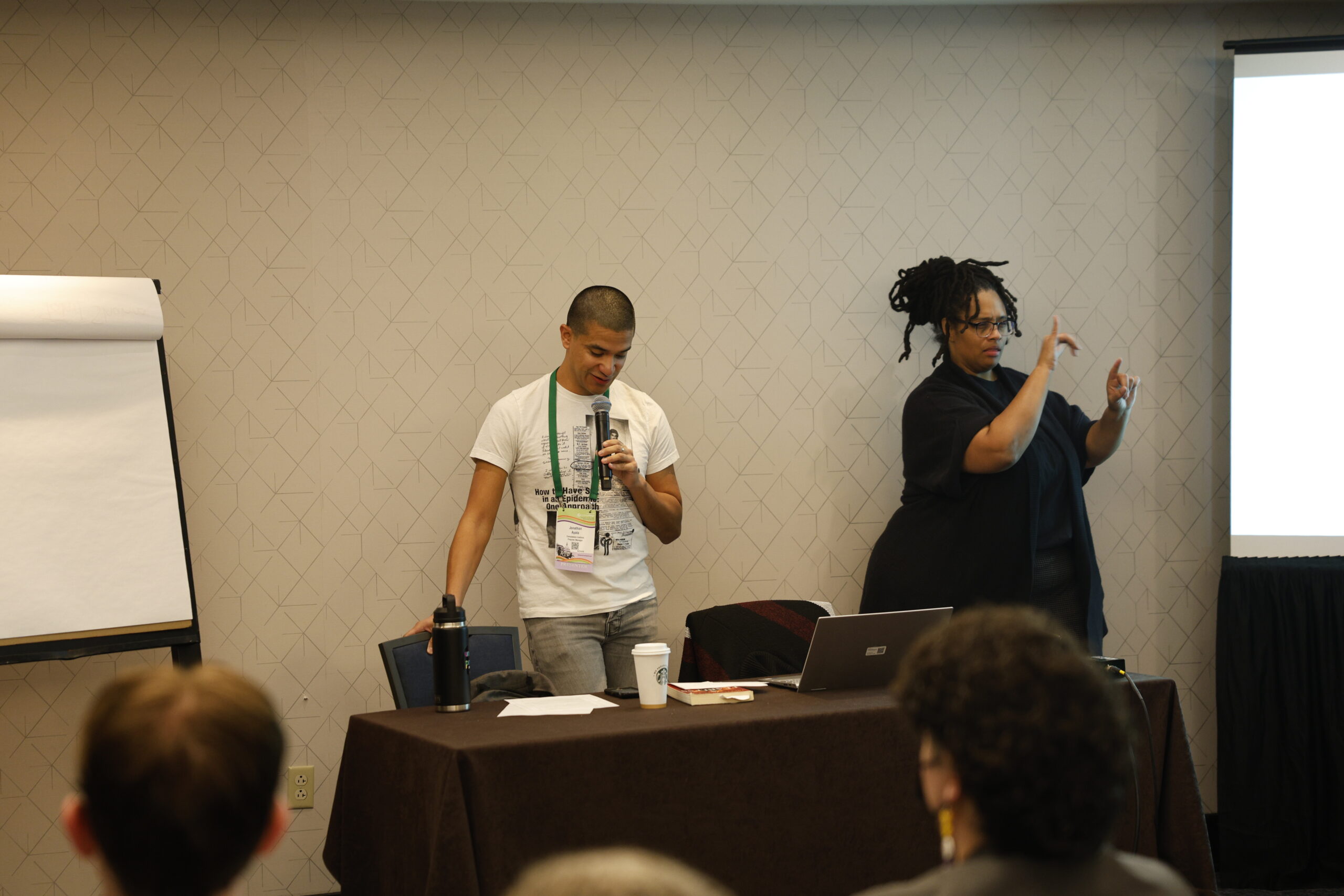
I carry with me to my work at CI, a deep commitment to do what I can for the collective care and liberation of all queer and TGNC people. For CI’s Health Program, that means creating partnerships with LGBTQ+ focused organizations working to make life better for queer and trans people. Or, that might mean resourcing health justice advocates and providers with self-compassion techniques and skills to help them sustainably engage in their crucial work. Earlier this year, CI attended Creating Change, the nation’s foremost political, leadership, and skills-building gathering for the LGBTQ+ movement, and supporting advocates there was precisely our goal.
I want to highlight that compassion begins with a wish to see a situation changed. Often, that wish is a catalyst for a compassionate action. But sometimes, that wish to see a situation changed for the better will have to be enough (Tonglen is a great tool to use here). In those instances, we have to show ourselves compassion for doing what we can do and learn to be content with that.
Kierra Johnson, the CEO of the LGBTQ Task Force, which puts on Creating Change, said in her keynote address this year that the LGBTQ+ movement, was unbelievably successful in bringing issues like same-sex marriage and larger LGBTQ+ acceptance to the social forefront in the United States. However, the LGBTQ+ movement lost sight of our central theory of change: when we invest in person-to-person connections and organizing, we create a larger coalition that can move the needle on so many issues. Our power is not in our ability to convince stores to carry rainbow-themed merchandise each June. Our true power is our commitment to taking care of our people.
With that, CI wishes you and yours a happy and safe Pride.
Click here to read more compassion blogs and stories.