

Articles
What we’re contemplating, doing, and reading.
Building a Compassion-Centered Healthcare System: Part 2
A Dialogue Between The Compassion Institute and El Rio Health: Part 2
This is a two-part series about a yearslong partnership between El Rio Health and the Compassion Institute. You can read part one of the series here.
Beyond Wellbeing
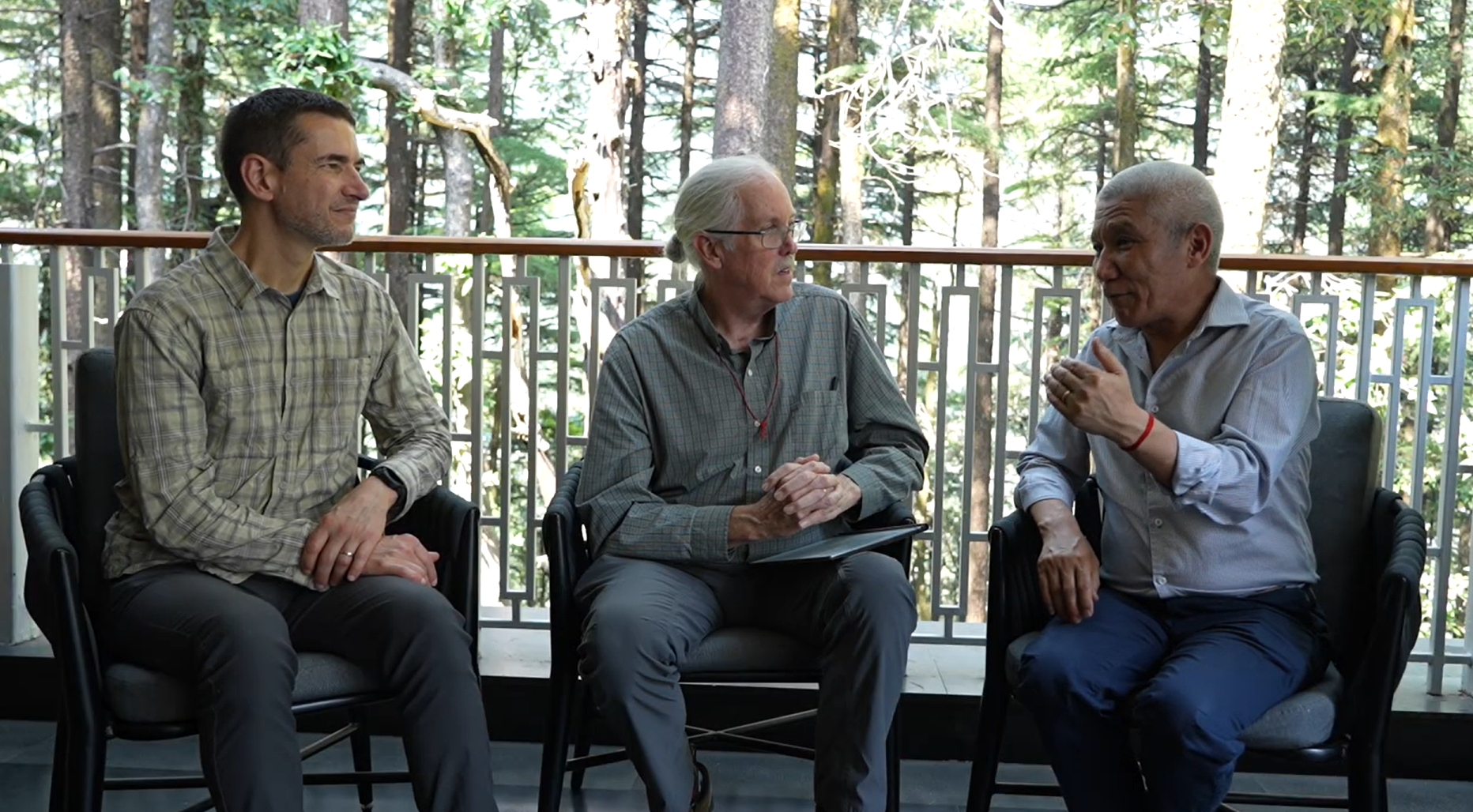
One of the most striking moments in the conversation came when Doug Spegman broadened the discussion beyond physicians and patients to the healthcare system itself.
"We've talked about the patients. We've talked about systems. We know it's the clinicians who are giving the care, but it's also the support staff. It's finance. It's all elements. What's your vision of that transformation?"
Doug Spegman
Doug’s question reflects one of the most important lessons to emerge from the partnership with El Rio. Culture is not created by clinicians alone. Every person, whether greeting patients at the front desk, processing referrals, maintaining facilities, managing finances, or providing clinical care, contributes to the experience of healthcare.
Jinpa responded by expanding the vision even further.
"Everyone working within the healthcare system, from support staff to physicians, is part of the healthcare system. Even if it is only a single training session, connecting every person with the larger purpose of their work is important. People working in offices don't always see the direct impact on patients, but they make possible the work physicians and caregivers do every day. Helping everyone connect the dots allows people to see their work within the context of this larger caring profession."
This vision aligns closely with what Compassion Institute observed throughout its evaluation at El Rio. Participants repeatedly described how compassion-based trainings helped strengthen relationships across departments, creating a greater sense of shared purpose and community that continued long after the formal programs concluded.
Compassion, it turns out, is not only expressed in clinical encounters. It can become part of the organizational culture itself.
From Organizational Wellbeing to Community Wellbeing
Doug then widened the lens once again.
“As a community health center, it's really about the community. Speak maybe even more to how this can become the spark of being kind for the whole community... and thereby change the whole dynamic of healthcare, which fundamentally is rooted in asking, ‘What's wrong with you?’ instead of, ‘What's right with you, and how do we support it?’”
Doug Spegman
Doug then widened the lens once again.
Jinpa acknowledged that healthcare has an opportunity to move increasingly toward prevention, education, and supporting people before illness occurs. At the same time, he emphasized something equally important.
“For a system like El Rio that takes compassion seriously as an explicit value, compassion means paying special attention to people who are going through difficult times, while balancing that with accountability and fairness. When the culture changes, employees identify more deeply with the organization because they know the organization cares about them. Their relationship becomes more than simply ‘this is where I work.’ When that happens, it becomes magical.”
Thupten Jinpa
The evaluation echoed this insight.
Participants consistently described compassion as something experienced not only through individual interactions, but through relationships, trust, and a growing sense that they were part of a community committed to supporting one another.
A Healthcare System Under Growing Pressure
This vision is emerging at a consequential moment for community healthcare in the United States. Nearly one in ten Americans receives care through a federally funded community health center. In 2025, these centers served a record 32.7 million people across the country—including one in eight children and one in five people living in rural communities. About 90% of patients have incomes at or below 200% of the federal poverty level.
These numbers underscore the essential role federally qualified community health centers play in the delivery of primary care services in the United States. In the aggregate they represent the largest primary care network in the nation. They provide primary care, women’s health and obstetrics, dental, behavioral health, and other services in urban and rural communities, regardless of a patient’s ability to pay. The people they reach include 25 million Medicaid, Medicare, and uninsured patients, as well as hundreds of thousands of veterans and millions of people living in communities where access to healthcare can otherwise be limited.
But growing demand is colliding with increasing financial pressure. Between 2023 and 2024 alone, the number of people served by community health centers grew by more than one million, while rising operating costs outpaced revenues. The national net operating margin for community health centers fell from +1.6% in 2023 to –2.1% in 2024.
At the same time, community health centers are particularly vulnerable to changes in public healthcare financing. Medicaid accounts for 45% of all community health center revenue nationally and covers nearly half of their patients.
Together, these pressures point to a multifaceted existential challenge larger than any single healthcare organization: How do institutions created to care for communities sustain their workforce, preserve connection and purpose, and continue delivering humane care when the system itself is under increasing strain?
That question gives the work at El Rio and Elk Ridge significance well beyond Arizona. If compassion can be developed not simply as an individual skill, but as a measurable organizational capacity, strengthening workforce wellbeing and retention, organizational culture, patient experience, and connection to mission, it could contribute to a new model for how community healthcare organizations remain resilient while continuing to serve their communities.
In that sense, this work is not occurring despite the pressures facing community healthcare. It is being developed in response to them.
Why Compassion Matters Most During Difficult Times
These pressures raise an unavoidable question: In a healthcare environment where organizations are being asked to serve more people with increasingly constrained resources, is this really the moment to invest in compassion?
That question surfaced directly in the conversation in Dharamsala. Doug acknowledged the realities many leaders face every day.
"Some people may hear this initiative and say we're in the midst of tremendous financial pressures... Medicaid cuts... different programs that have been cut... federal funding reduced... They may say, 'I get it. I'd want to be along for the ride, but this is not the time to talk about this.' How would you respond?"
Doug Spegman
Jinpa’s answer was immediate.
"My response is: this is exactly the time. When there is pressure from outside, members of the community need to come together. Bringing compassion as a perspective—as a set of mental skills, helps create a system where people don't feel alone. Political winds change. Policies change. Opportunities come and go. This is exactly the time."
Thupten Jinpa
This perspective resonates deeply with what Compassion Institute heard throughout the evaluation. Participants did not view compassion as another task added to already demanding schedules. Instead, they described it as creating space for connection, helping them remain grounded in purpose, and reminding them that they were not navigating the challenges of healthcare alone.

The Power of Partnership
Throughout the conversation, Mark Schildt reflected on the significance of bringing diverse partners together.
"The possibilities of expanding these collaborations are really exciting. The value of being here together in person and creating personal connection with these collaborators is really immeasurable in advancing this effort."
Mark Schildt
Jinpa agreed.
"What attracts me particularly is your openness. There is already a critical mass of people who have been exposed to this work. There is fertile ground. Having Compassion Institute…(sic)...and your leadership together in one room sharing ideas, that is what really excites me."
Thupten Jinpa
These remarks capture an important aspect of the partnership. Compassion Institute has never viewed this work as something done to healthcare organizations.
Rather, it has been built with healthcare leaders who are willing to ask difficult questions, examine organizational culture honestly, and work together to develop approaches that can benefit the broader field.
That possibility, of developing something that could ultimately benefit healthcare well beyond El Rio, surfaced explicitly in the conversation. Jinpa pointed to the importance of demonstrating impact on the outcomes healthcare systems themselves care about:
“In the end, even in the healthcare system, self-interest will drive. And if it turns out that physician retention, prevention of burnout, patient satisfaction, if you can make an impact on those, which healthcare system wouldn’t want to embrace this, right?”
He then widened the lens:
“What works then gets adopted worldwide. So, you know, I don’t want to be hubristic, but I think the potential is there to truly serve humanity.”
Doug responded with a laugh:
“Well, I love your glass half full.”
Then, after laughter shared by the group, he added:
“And we share in that.”
The exchange captured something important about the partnership: the ambition is not simply to deliver successful programs at El Rio. It is to learn whether compassion can produce meaningful, measurable change within a healthcare system, and, if it can, what those lessons might offer to others.
Building on an Existing Foundation
Toward the end of the discussion, Compassion Institute Executive Director Stephen Butler reflected on something that had become increasingly apparent throughout the partnership.
El Rio’s commitment to wellbeing did not begin when Compassion Institute arrived. It had already invested years in creating a culture that valued clinician wellbeing and organizational health, becoming the first federally qualified health center to receive the American Medical Association’s Joy in Medicine Gold Standard recognition.
Jinpa immediately reinforced that observation.
"The reason El Rio and Compassion Institute have worked together for five years is because CI found a partner that had already established a culture receptive to this vision. Your recognition through the Joy in Medicine program demonstrates your commitment to creating a healthcare environment where compassion is experienced by both caregivers and patients."
Thupten Jinpa
This distinction is important. Compassion Institute did not arrive with a one-size-fits-all solution. El Rio did not seek a single program to solve burnout.
Instead, the partnership grew from a shared belief that creating healthier healthcare systems requires both organizational commitment and evidence-based approaches that can evolve over time.
Looking Ahead
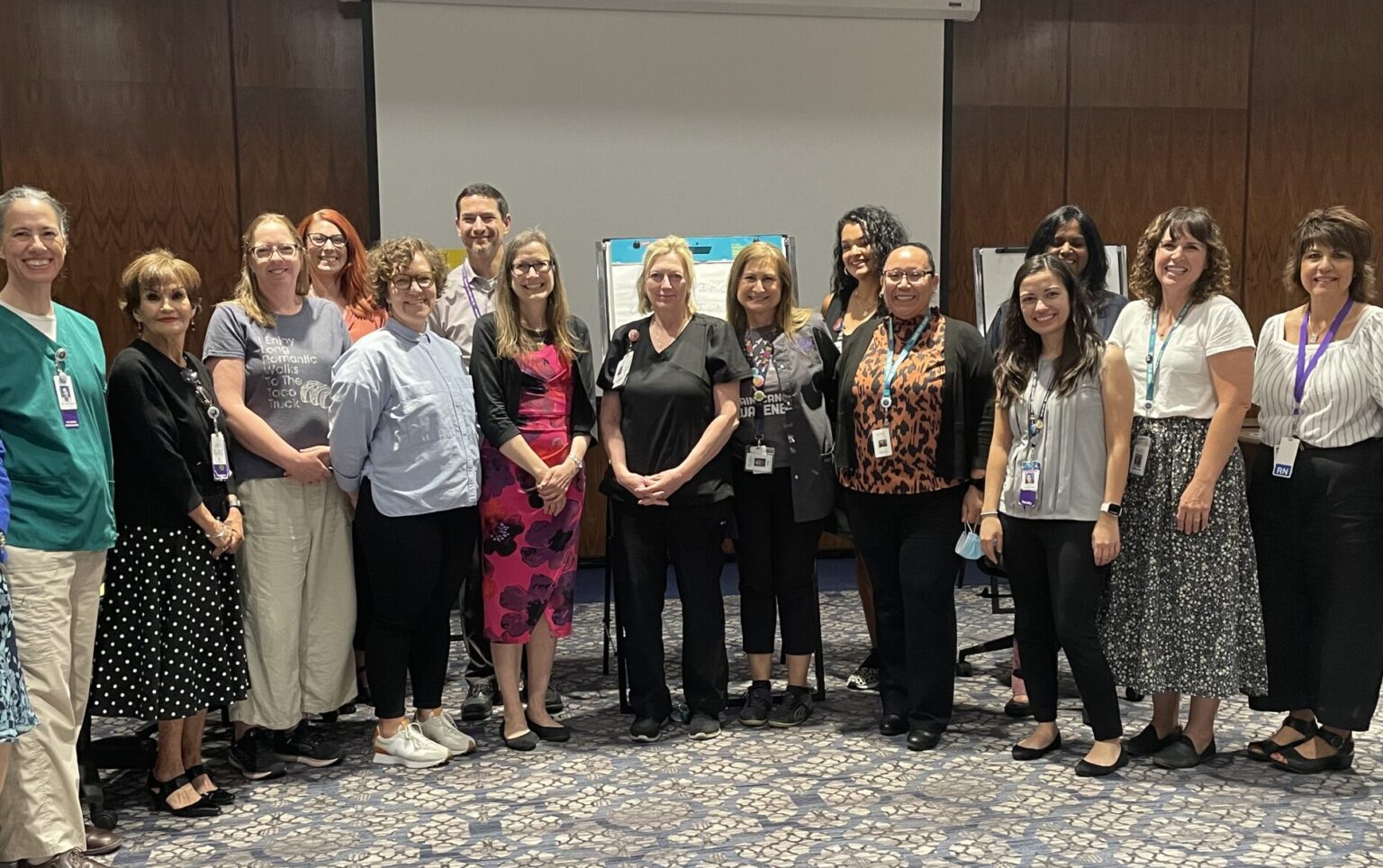
Today, the partnership between El Rio Health, Elk Ridge Community Health and Compassion Institute continues to evolve and deepen.
Over five years, the work has grown from compassion training for individual clinicians and staff into a larger exploration of what it might mean for compassion to become part of the culture and infrastructure of a healthcare system. There is now an opportunity to go deeper: expanding workforce reach, developing internal ambassadors who can sustain the work, evaluating agreed organizational outcomes, all of which contribute to building a sustainable model for implementation.
For El Rio and Elk Ridge, this means moving from promising programs toward a more fully integrated, compassion-centered approach, one that reaches beyond individual caregivers to colleagues, patients, leaders, and ultimately the wider community.
As Doug Spegman describes the vision:
“Within the community health center movement there has always been the acknowledgement that the art and science of healing is a radical call to relationship that is deeply personal and intimate... as well as inherently communal.”
That understanding points toward a health system in which compassion strengthens relationships across the organization and community, helping sustain people in demanding work while contributing to the healthcare workforce of tomorrow.
But El Rio’s ambition extends beyond its own system. Its leadership sees the partnership as an opportunity to serve as a national innovation lab for community health: a place where compassion-centered approaches can be implemented at meaningful scale, evaluated in real-world conditions, refined through experience, and translated into a model that other community health organizations can adapt.
This is particularly significant for community health centers, which care for some of the country’s most diverse and underserved communities while navigating extraordinary workforce and resource pressures. What is learned at El Rio and Elk Ridge could help illuminate how compassion can strengthen organizational culture, workforce sustainability, patient experience, and the relationships connecting healthcare institutions to their communities.
For Mark Schildt, this is precisely the opportunity that greater investment creates:
“One of the most important impacts of the funding for scaling the work is that it will allow us to move from an individual-focused intervention to a collective intervention that has exponentially more power and impact in truly shifting the culture at all levels of the organization.”
That is what investment in this next phase makes possible: reaching more of the workforce while developing internal ambassadors; evaluating whether compassion translates into meaningful organizational outcomes; and creating the infrastructure and learning necessary to build a durable implementation model that can extend beyond a single health system.
There is still much to learn. That is precisely why this next stage matters.
The foundation has been built. Leadership is committed. A critical mass of people has experienced the work. The opportunity now is to test a larger proposition: whether compassion can become a measurable and sustainable organizational capability, and whether what is learned at El Rio and Elk Ridge can help inform the future of community healthcare more broadly.
Earlier in the conversation in Dharamsala, when Doug raised the financial and systemic pressures confronting healthcare and asked whether this was truly the moment to pursue such an ambitious vision, Jinpa’s response was immediate: this is exactly the time.
The next chapter is about putting that conviction into practice, going deeper, learning rigorously, and building something designed to endure.
Because when compassion becomes part of the way a healthcare system leads, learns, and cares for its people, its impact can extend far beyond any single organization, to the communities those organizations serve and, ultimately, to the wider community health system.
Click here to read more compassion blogs and stories.